

Summary:
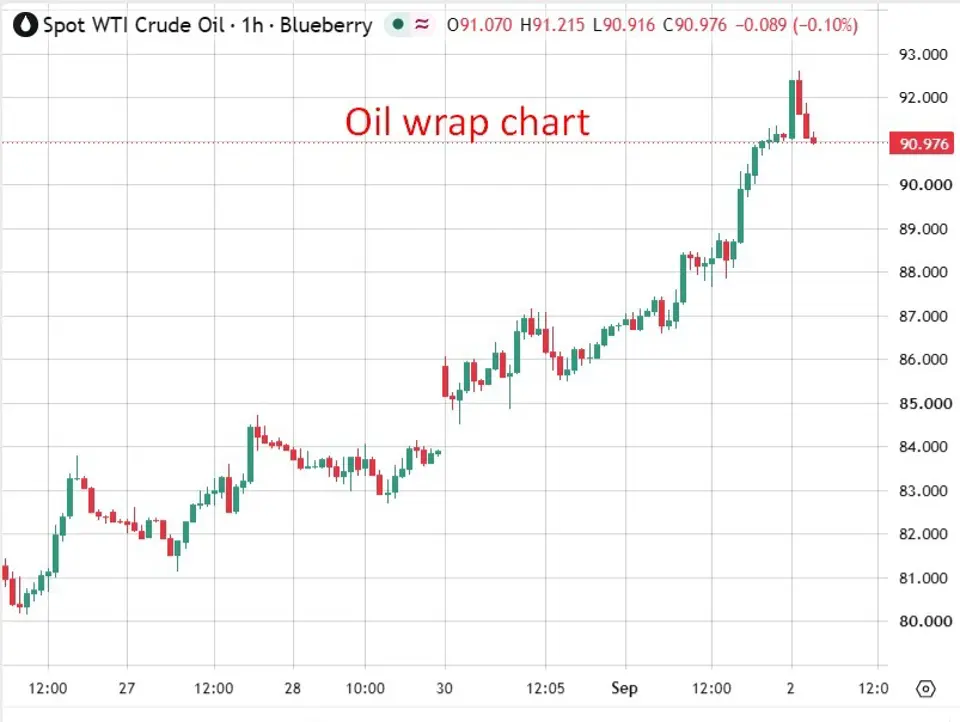
- Oil prices rose to a near six week high as deadly hostilities between the US and Iran showed no sign of easing
- Kuwaiti air defences engaged Iranian ballistic missiles and drones amid the latest exchange
- US Central Command confirmed strikes on IRGC air defence, radar, naval and mine laying sites in Iran on September 1, in response to attempted attacks on Strait of Hormuz shipping and US personnel
- The US struck two Iranian state tankers for the first time under a new “tanker for tanker” policy approved by President Trump, according to Axios, with around 100 targets hit and Iran’s retaliation largely intercepted
- A US official said the strikes degraded Iran’s attack capabilities and bought at least a month of lowered threat levels for shipping, per Axios
- President Trump said he is not seeking to force Iran to the negotiating table, framing Iran’s economy as collapsing under current pressure
- BOJ Governor Ueda, Finance Minister Katayama and board member Takata all signalled openness to further rate hikes, with Takata warning of upside inflation risk from energy prices and a possible neutral rate above market expectations
- USD/JPY rose as the yen weakened, with the US dollar firmer across the majors
- The RBNZ hiked its cash rate as expected, with accompanying commentary flagging further hikes if energy driven inflation persists; the NZD fell and underperformed on the session
- Australian Q2 GDP rose more than expected, keeping markets focused on the prospect of further RBA tightening
- Japanese and South Korean equities fell sharply, with analysts citing rising oil prices and bond yields as the key pressures on sentiment
Oil prices climbed to a near six week high on Wednesday as fighting between the United States and Iran continued with no sign of a ceasefire. Kuwaiti air defences engaged Iranian ballistic missiles and drones during the latest exchange, underscoring how far the conflict has spread beyond its original flashpoints. US Central Command confirmed that its forces struck Islamic Revolutionary Guard Corps air defence, radar, naval and mine laying sites in Iran on September 1, describing the action as a response to attempted attacks on shipping in the Strait of Hormuz and on US personnel in the region.
According to Axios, the strikes also marked the first time the US has hit Iranian government tankers under a newly approved tanker for tanker policy, targeting two state owned vessels as part of a broader wave that hit around 100 targets in total. Officials said Iran’s retaliation was largely intercepted. Axios reporter Barak Ravid cited a senior US official as saying the new strikes had degraded Iran’s attack capabilities in the strait and bought at least a month of lowered threat levels for commercial shipping.
President Trump addressed the conflict separately, saying he is not attempting to force Iran into negotiations, and framing the current pressure campaign as advantageous to Washington given what he described as a collapsing Iranian economy. The comments suggest the administration sees little urgency in pursuing talks while military and economic pressure on Tehran continues.
In Japan, a trio of policymakers added to a hawkish tone from the Bank of Japan. Governor Ueda said the bank wants to continue raising rates given still accommodative conditions, while stressing the need to carefully weigh the cumulative impact of five hikes already delivered. Finance Minister Katayama said Japan is monitoring debt markets with a high sense of urgency following a rise in JGB yields, while board member Takata, a known hawkish dissenter, warned that rising overseas rates could push Japan’s neutral rate above current market expectations and flagged energy prices as a risk to inflation overshooting target. USD/JPY rose as the yen weakened against the dollar, part of a broader advance in the US dollar across major currency pairs.
The Reserve Bank of New Zealand raised its cash rate as expected, with accompanying commentary indicating further increases remain likely should energy driven inflation pressures continue to firm. The New Zealand dollar fell in response and underperformed relative to other major currencies on the session.
In Australia, second quarter GDP rose by more than markets had anticipated, keeping investor attention focused on the likelihood of additional Reserve Bank of Australia tightening in the months ahead. Equity markets across the region reflected the accumulating pressure from these developments, with Japanese and South Korean shares falling sharply as analysts pointed to rising oil prices and bond yields as the principal drivers of the selloff.




Leave a Reply