

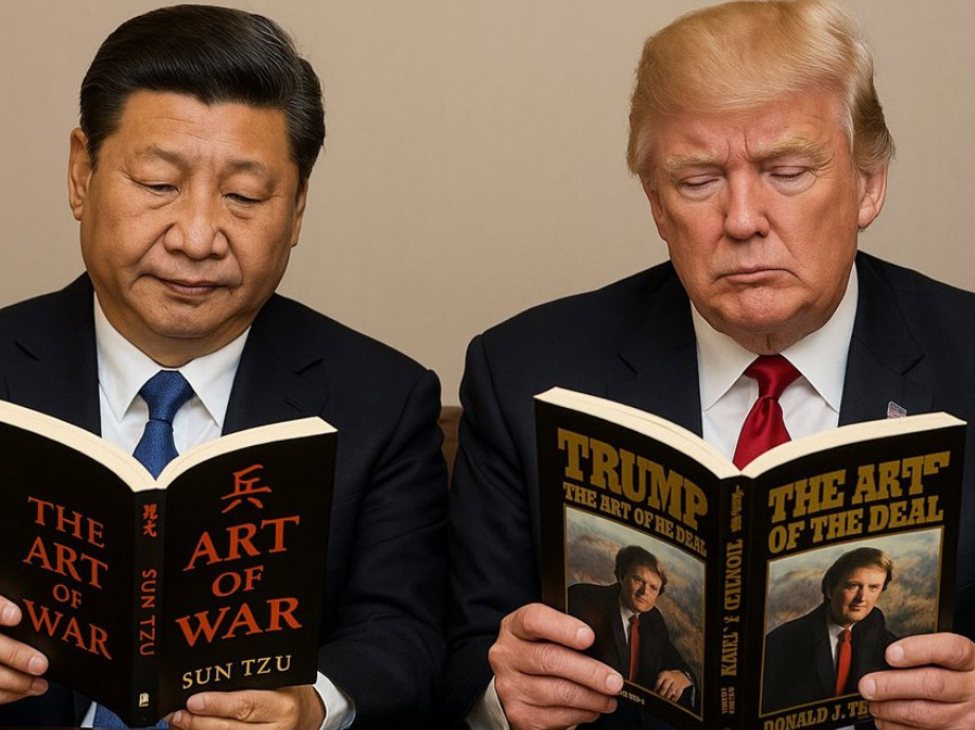
WSJ (gated) flags Taiwan risk as China tests Trump’s transactional policy stance.
Summary:
- WSJ flags rising uncertainty in US Taiwan policy
- China sees opportunity in Trump’s approach
- Taiwan potentially part of broader negotiations
- Focus on subtle shifts in policy language
- Arms sales pause signals softer stance risk
- China increasing military and diplomatic pressure
- US distracted by Middle East conflict
- Policy ambiguity seen as destabilising risk
A detailed Wall Street Journal report highlights growing concern that US policy toward Taiwan may be entering a more uncertain and potentially transactional phase under President Donald Trump, creating what Beijing sees as a strategic opening.
The original piece is extensive and nuanced, but the key takeaway is that China’s leadership increasingly believes Trump’s approach to Taiwan is less anchored to longstanding US doctrine and more open to negotiation within broader geopolitical and economic deals.
At the centre of this shift is Trump’s perceived willingness to treat Taiwan as part of a wider bargaining framework with Beijing. This includes trade, energy access and supply chain issues, rather than maintaining the rigid deterrence posture that has defined US policy for decades.
Beijing appears to be testing whether it can secure even small changes in US language or positioning, particularly around Taiwan independence and “peaceful reunification.” While these may seem semantic, such shifts would be viewed by China as a significant diplomatic victory and could alter perceptions within Taiwan itself.
Recent developments reinforce this uncertainty. The White House has reportedly paused a major arms sale to Taiwan ahead of a planned Trump-Xi summit, signalling a desire to avoid friction in bilateral relations. At the same time, US policy language around Taiwan has shown subtle but notable adjustments, further fuelling debate over Washington’s long-term commitment.
China, for its part, is increasing pressure through near-daily military activity around Taiwan while also pursuing diplomatic avenues to reshape the narrative.
The broader context adds to the risk. With US strategic focus partially diverted by the Middle East conflict and domestic political pressures building ahead of midterm elections, Beijing may view this as a window to advance its position.
While US officials maintain that deterrence ultimately rests on military posture rather than rhetoric, markets and regional allies are increasingly focused on whether policy ambiguity itself could become a destabilising factor.





Leave a Reply