
Summary:
- ANZ Business Confidence (Mar): 32.5 (prev. 59.2)
-
ANZ Activity Outlook (Mar): 39.3 (prev. 52.6)
- ANZ Business Outlook shows weak business confidence persists
- Inflation indicators remain elevated despite softer activity signals
- Pricing intentions and cost pressures still sticky
- Activity indicators mixed, pointing to slowing momentum
- Firms cautious on outlook amid uncertainty and higher costs
- Data highlights ongoing inflation persistence risk
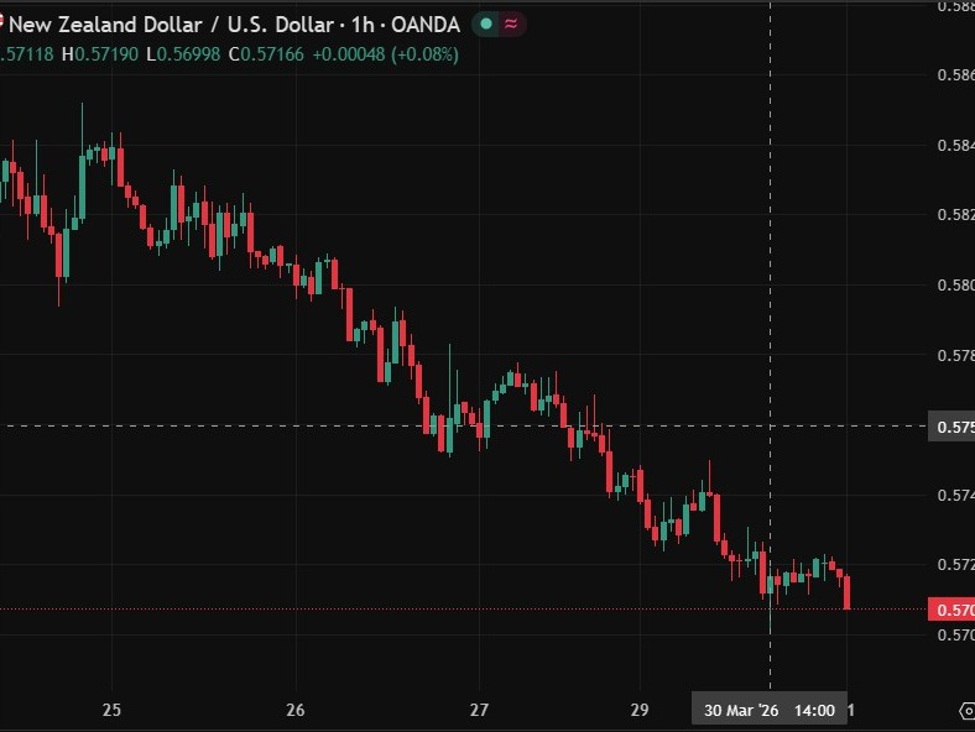
New Zealand business sentiment deteriorated sharply in March, even as inflation pressures remain elevated, highlighting a growing divergence between weakening activity and persistent price pressures.
The latest ANZ Business Outlook survey showed a significant pullback in forward-looking indicators, with headline business confidence dropping to 32.5 from 59.2 previously, while firms’ own activity outlook fell to 39.3 from 52.6. While both measures remain in positive territory, the magnitude of the decline points to a clear loss of momentum across the economy.
The deterioration in sentiment comes amid heightened uncertainty and tighter financial conditions, with businesses becoming more cautious on the outlook for demand and investment. The sharp fall in activity expectations suggests that the economy may be entering a softer phase, even if conditions have not yet turned outright contractionary.
However, the survey also reinforces that inflation pressures remain sticky. Pricing intentions and cost indicators continue to signal that firms are facing elevated input costs and are still passing these through to consumers. This dynamic underscores the risk that inflation may prove more persistent, even as growth slows.
The combination of weakening confidence and resilient inflation indicators presents a challenge for the Reserve Bank of New Zealand. While softer activity would typically support a more accommodative stance, ongoing pricing pressure limits the scope for policy easing in the near term.
Overall, the survey points to an economy losing momentum but still grappling with entrenched inflation dynamics, leaving policymakers balancing downside growth risks against the need to ensure inflation pressures are contained.





Leave a Reply