

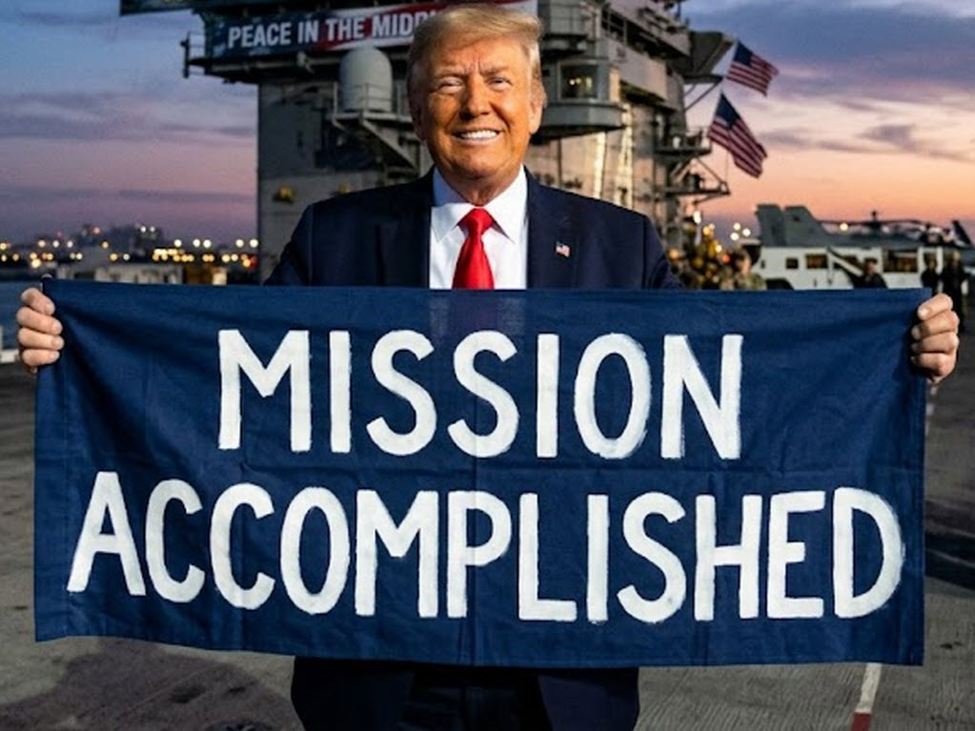
The White House is saying that Pres. Trump is to reiterate 2 – 3 week timetable for the end of the Iran operations.
The president is to address the nation at 9 PM ET.
Course how all this ends is anyone’s guess. Israel if it had it’s way would want it to go on until all of Iran was destroyed with the splinter terrorist groups.
Iran doesn’t operate through a single group—it uses a network of proxy and splinter militias across the Middle East, often referred to as part of its broader “Axis of Resistance.”
Core Iran-backed groups (primary proxies)
-
Hezbollah (Lebanon)
- Iran’s most important and longest-standing proxy
- Highly trained, heavily armed, and politically integrated
-
Hamas (Gaza)
- Sunni group but receives funding, weapons, and training from Iran
-
Palestinian Islamic Jihad (Gaza)
- Smaller, but more directly aligned with Iran than Hamas
-
Houthis (Ansar Allah – Yemen)
- Control large parts of Yemen
- Use missiles, drones, and maritime attacks
Iraq-based splinter militias (most fragmented network)
- Kataib Hezbollah
- Asa’ib Ahl al-Haq
- Harakat Hezbollah al-Nujaba
- Badr Organization
Often operate under umbrella labels like:
- “Islamic Resistance in Iraq”
Key point:
- These groups are loosely coordinated but semi-independent, which is why they are often considered splinter networks.
Syria-based militias
- Liwa Fatemiyoun (Afghan fighters backed by Iran)
- Liwa Zainebiyoun (Pakistani fighters)
- Other Shia militias supporting the Assad government
Many are extensions of Iraqi or Hezbollah-linked forces.
Lebanon & regional extensions
-
Hezbollah-affiliated units operating beyond Lebanon
- Syria
- Iraq
- Broader regional logistics and finance networks
Yemen (Houthis and sub-groups)
-
Houthis are the main force, but include:
- Local tribal factions and sub-units
- Increasing coordination with Iranian and Hezbollah support
How Iran manages the network
- Coordinated primarily through the IRGC Quds Force
-
Provides:
- Weapons
- Training
- Funding
- Strategic direction
Big picture takeaway
-
Iran’s approach is decentralized:
- Core proxies (Hezbollah, Hamas, Houthis)
- Plus numerous splinter militias (especially in Iraq and Syria)
-
This structure allows:
- Plausible deniability
- Multiple pressure points across the region
- Flexibility in escalation without direct confrontation
Bottom line
-
The most recognizable Iran-backed groups are:
- Hezbollah, Hamas, Palestinian Islamic Jihad, Houthis
-
The real fragmentation comes from:
- Iraqi and Syrian militias, which function as splinter groups with varying degrees of independence
- Together, they form a distributed network that plays a central role in Middle East conflicts
This article was written by Greg Michalowski at investinglive.com.
Source link





Leave a Reply