

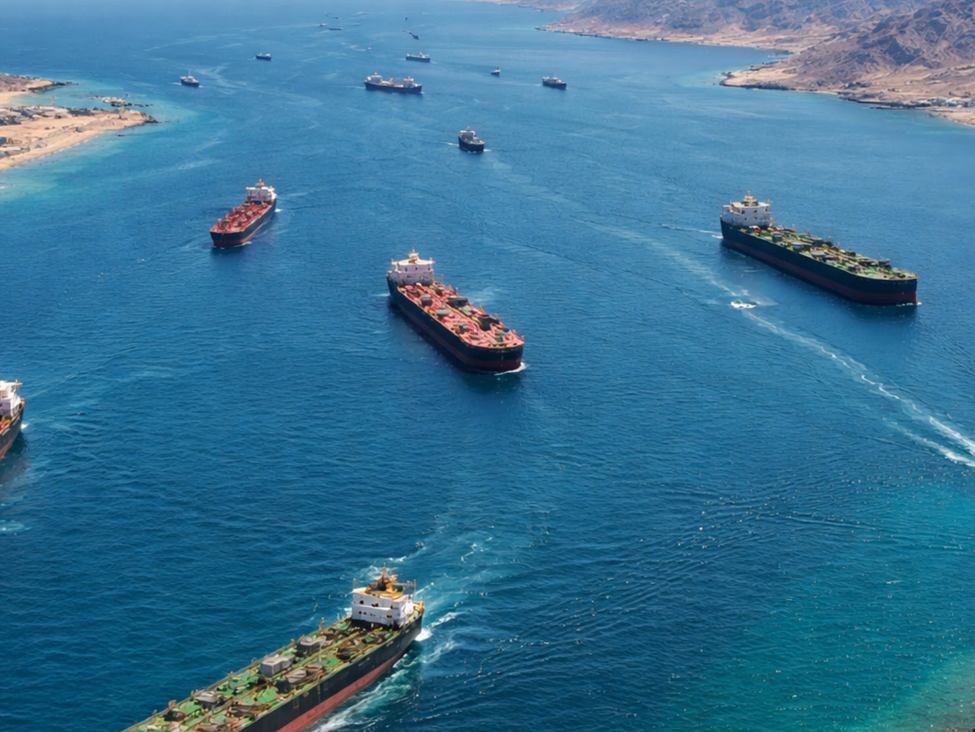
The FT is reporting on this, citing officials and industry executives as saying that the Gulf states are looking to explore new pipelines to reduce their reliance on the Strait of Hormuz in exporting their oil and gas. That as Iran continues to cause a more vulnerable situation amid their open-ended threat and control over the strait.
The idea of using pipelines isn’t new and there are already well-established ones across the region. However, the issue with them is that they are expensive and politically messy in general. That not to mention that it can take many years before completion.
But with Iran pushing many Gulf countries to their limits in this latest episode, perhaps there might be a change of tone to try and push for pipelines to be developed more quickly.
Saudi Arabia is one to be lucky enough to have the East-West pipeline in place, which is now acting as the primary alternative to the Strait of Hormuz. It is a “relief valve” of sorts but doesn’t come close to compensating for the loss from not being able to pass through the strait.
For some context, the pipeline offers about 7 million barrels of oil per day. So, even at maximum capacity it is just about one-third of the volume that goes through the Strait of Hormuz.
The report cites Maisoon Kafafy, a senior adviser to the Atlantic Council’s Middle East programmes, in saying that “the mood in the Gulf has now changed”. That as countries are needing to think about the long game here in not allowing for a repeat of the situation we’re seeing in the past month.
All that being said, it’s still a tough challenge. As mentioned above, it is politically complex and the costs of trying to build something similar to the East-West pipeline can be rather hefty – in the billions even. And at the end of the day, it is going to take many, many years to complete. So, there’s that to consider.
The full report can be found here (may be gated).





Leave a Reply