

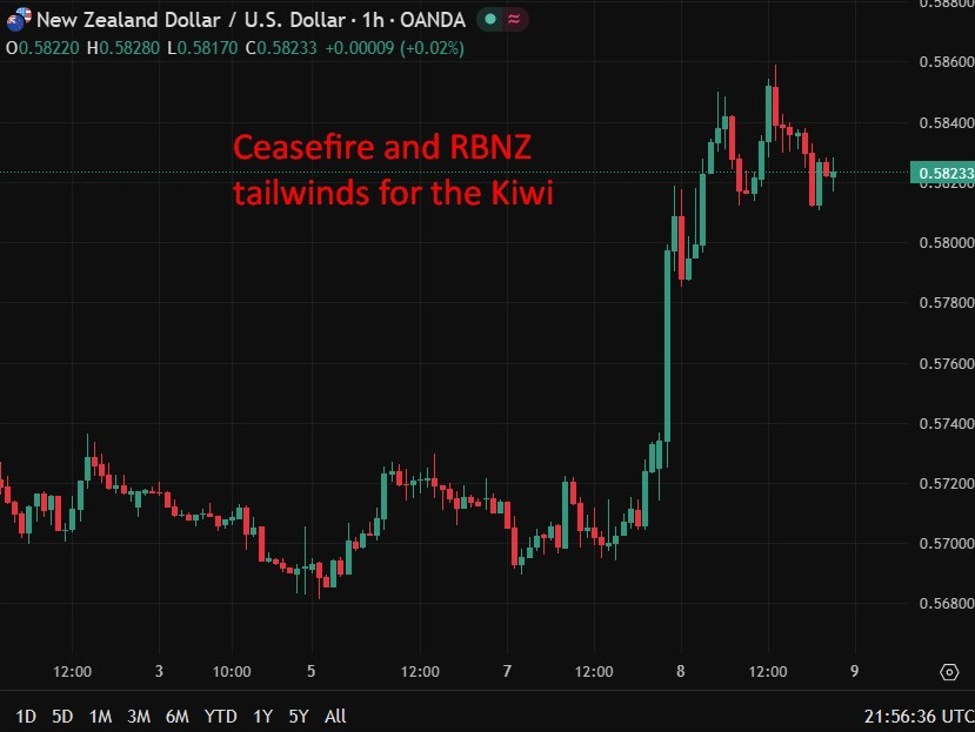
RBNZ sees growth recovery if ceasefire holds, but inflation risks remain elevated.
Summary:
- RBNZ Governor expects economic growth in 2026
- High-frequency data shows early-year momentum improving
- March stable but April likely softer amid geopolitical tensions
- Growth outlook tied to Middle East ceasefire holding
- Fuel price decline seen as key support for recovery
- RBNZ held cash rate at 2.25% this week
- Inflation forecast at 4.2%, above 1–3% target band
- Supply chain disruption adds to inflation persistence
- Central bank remains data-dependent on policy path
New Zealand’s central bank expects the economy to return to growth in 2026, with Governor Anna Breman signalling cautious optimism that activity can improve if geopolitical risks begin to ease.
Speaking on Thursday, Breman said recent high-frequency indicators suggest economic momentum had started to pick up earlier in the year, particularly through January and February. While uncertainty rose in March amid escalating tensions in the Middle East, she characterised conditions as largely “business as usual” at that stage, though warned April data is likely to show a softer patch.
The outlook, however, remains highly contingent on developments in the Middle East. Breman indicated that if the current ceasefire holds and fuel prices begin to decline, business confidence and activity could recover, allowing for a more sustained improvement in economic performance over the course of the year.
Her comments follow the Reserve Bank of New Zealand’s decision on Wednesday to hold the official cash rate at 2.25%, as policymakers opted to assess the economic fallout from the Iran conflict while maintaining a readiness to respond if inflation pressures intensify. The central bank reiterated that inflation is expected to rise to around 4.2%, remaining well above its 1% to 3% target band.
While Breman acknowledged that a ceasefire could help stabilise conditions, she cautioned that inflationary effects from the conflict are likely to linger. Beyond oil prices, disruptions to global supply chains are expected to continue feeding into costs, complicating the path back toward target.
Nonetheless, she suggested the inflation profile may be temporary in nature, with a near-term spike followed by a gradual easing. The central bank will remain data-dependent, she said, closely monitoring incoming information and adjusting its forecasts accordingly as the outlook evolves.
Overall, the RBNZ appears to be balancing a fragile growth recovery against persistent inflation risks, with policy flexibility preserved as geopolitical uncertainty continues to shape both the domestic and global economic landscape.
Breman is all over the media today



Leave a Reply