

Summary:
- FT reports Israel–Lebanon ceasefire expected soon; Trump adds upbeat tone.
- Reports Iran used Chinese satellite for US base surveillance, raising geopolitical risks.
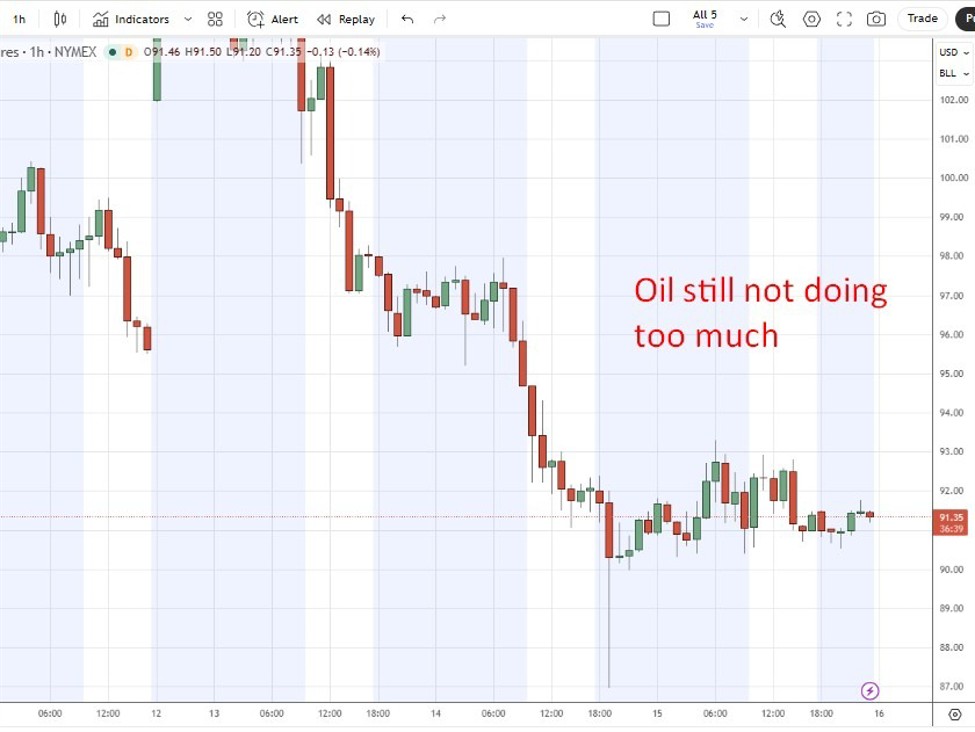
- Oil traded subdued despite ongoing supply disruption concerns.
- Japan signals heightened FX vigilance; yen edges higher on the session.
- ECB’s Schnabel reinforces “wait-and-see” stance on Iran shock.
- Australia jobs steady; China data mixed with strong GDP but weak consumption.
- US defence production push highlights prolonged conflict dynamics.
A more constructive tone crept into markets through the session, with geopolitical headlines offering cautious optimism even as underlying risks remain elevated.
The Financial Times reported that a ceasefire between Israel and Lebanon could be imminent, citing Lebanese officials. That narrative was reinforced later in the session by upbeat remarks from President Trump, helping stabilise sentiment. At the same time, reports that Iran may have used a Chinese satellite to monitor US bases added a more complex and potentially escalatory dimension to the conflict, with implications for US-China relations and the evolution of modern warfare.
Oil markets traded in a relatively subdued range, suggesting some consolidation after recent volatility, even as supply risks tied to Hormuz disruptions remain unresolved.
In FX, Japan remained firmly in focus. Finance Minister Satsuki Katayama said Tokyo and Washington agreed to intensify communication on exchange rates following talks with US Treasury Secretary Scott Bessent. She later reiterated that authorities are closely monitoring FX moves, warning that oil-driven volatility is feeding into currency markets and affecting the broader economy. The yen edged modestly stronger on the session, with intervention risk still lingering in the background.
On the central bank front, ECB board member Isabel Schnabel struck a measured tone, noting the euro area is in a relatively favourable position after returning inflation to target pre-war. She emphasised that policy is broadly neutral and that the ECB can take time to assess whether the Iran shock generates lasting second-round inflation effects.
Data flow was mixed. Australia’s labour market remained resilient, with employment rising 17.9k (exp 20k) and unemployment steady at 4.3%, reinforcing the view that the RBA retains room to tighten. The Australian dollar gained, lifting the kiwi alongside it, while the US dollar was broadly weaker.
In China, Q1 GDP beat expectations at 5.0% y/y (exp 4.8%), though accompanying activity data painted a softer picture, with weak retail sales and ongoing property sector stress highlighting a fragile recovery.
On the corporate front, reports that the Pentagon is exploring ways to boost weapons production with US manufacturers underscore the likelihood of sustained defence demand, with potential spillovers into broader industrial sectors.


Leave a Reply