
-
The policy rate may still require adjustments depending on how various risks develop.
-
Should the economy progress according to the base case, any changes to the policy rate will likely be minimal.
-
Ongoing generalized inflation triggered by sustained high energy costs could necessitate consecutive rate hikes.
-
Significant new trade restrictions from the U.S. might force further cuts to the policy rate.
-
Monetary policy must remain flexible as economic uncertainty is currently at unusually high levels.
-
Higher global oil prices boost the value of energy exports, even as they strain domestic consumers and firms.
-
The conflict in the Middle East is anticipated to have a negligible impact on overall Canadian growth.
-
Policy decisions will be heavily influenced by USMCA negotiations, Middle East tensions, U.S. tariffs, and energy costs.
-
A need for higher policy rates could arise if energy prices remain elevated for an extended period.
-
Artificial Intelligence is currently not a major factor in our policy-making process.
-
There is no established schedule for potential future interest rate increases.
-
No path for the policy interest rate is entirely without risk.
-
Raising rates now would be regrettable if oil prices subsequently dropped before the policy took full effect.
-
Economic slack suggests that rising energy costs won’t immediately translate into higher prices for goods and services.
-
Current remarks should not be interpreted as formal forward guidance.
The market was pricing in 60 bps of hikes before the BOC but that’s drifted down to 40 bps. With that, USD/CAD has been volatile. It was dragged lower by the BOC headlines but has been boosted by a $5.85 rise in Brent prices to $117.
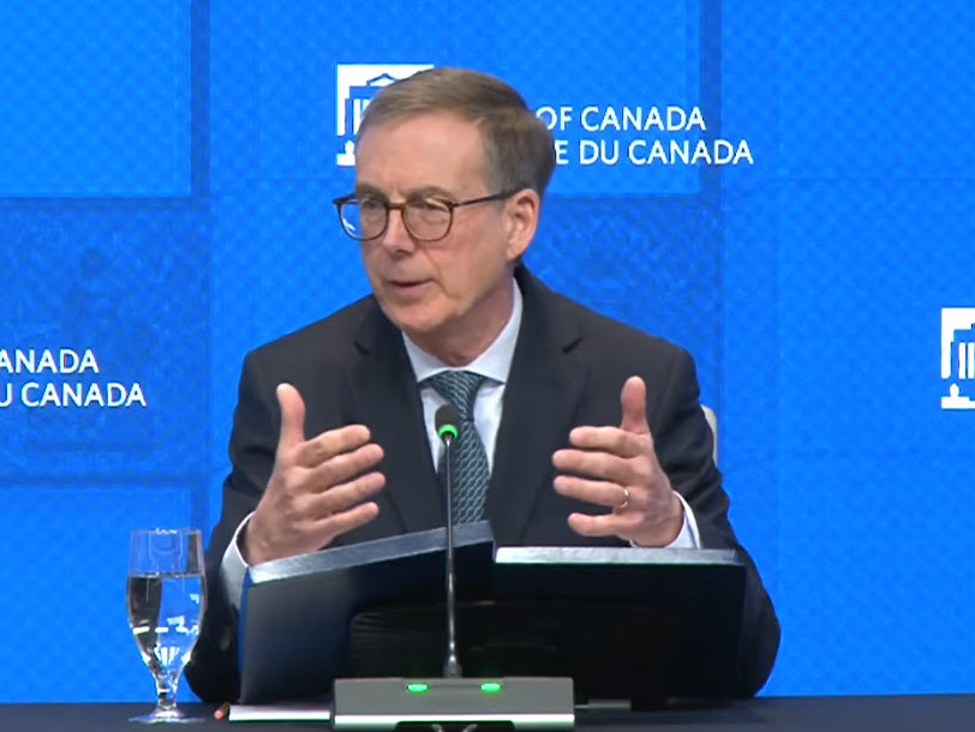
Overall, Bank of Canada Governor Tiff Macklem’s remarks underscore a “nimble” approach to monetary policy amid a landscape of heightened global volatility. While acknowledging that economic slack currently buffers the immediate pass-through of energy costs, Macklem warned that sustained high oil prices could trigger rate hikes to combat generalized inflation, though that’s not the base case. Conversely, the Governor introduced a “two-way” risk profile, noting that aggressive US trade restrictions or tariffs might actually necessitate rate cuts to support the domestic economy.
It’s tough to be Macklem right now.
USD/CAD 10 minutes




Leave a Reply