

Summary bullets:
- Nvidia beat top and bottom line estimates, announced an $80bn share buyback and a 25-fold dividend increase, but shares traded flat to lower post-earnings; US equity futures gave back some prior session gains
- SpaceX filed for a Nasdaq IPO under ticker SPCX shortly after the Nvidia announcement, with Elon Musk retaining 85.1% combined voting power through a dual-class share structure
- Japan’s April exports rose 14.8% year-on-year, well above the 9.3% forecast, producing a surprise trade surplus of 301.9bn yen; crude oil import volumes collapsed 64%, their steepest fall since 1980
- Japan’s flash composite PMI eased to 51.1 in May from 52.2 in April, a five-month low, as services stalled for the first time in over a year and selling price inflation hit a nearly 19-year high
- BOJ board member Koeda said underlying inflation is already around 2% and the central bank needs to continue raising rates, warning Middle East developments may push inflation above target
- Australia’s flash composite PMI fell to 47.8 in May from 50.4 in April, the second contraction in three months, with business sentiment matching its pandemic-era low
- Australia’s unemployment rate rose to 4.5% in April, its highest since November 2021, as employment fell 18,600 against expectations of a 17,500 gain; RBA August hike pricing collapsed from 81% to 42%
- National Australia Bank pushed its RBA hike call from June to August following the jobs data; markets no longer fully price any further RBA tightening for 2026
- Iran’s newly formed Persian Gulf Strait Authority declared a controlled maritime zone over the Strait of Hormuz, requiring all vessels to seek authorisation before transit
- The Iranian Foreign Ministry said it had received US viewpoints on the conflict and was studying them; the Pentagon is planning a high-level delegation to Beijing to lay groundwork for a Hegseth visit to China
- Asia-Pacific equities took direction from Wall Street gains; KOSPI surged over 7% as Samsung Electronics rallied after a last-minute wage deal averted an 18-day strike
- Japan’s Nikkei rose nearly 3.5%; Chinese mainland markets gained around 0.5% despite a PBoC liquidity injection, while Hong Kong’s Hang Seng slipped into the red
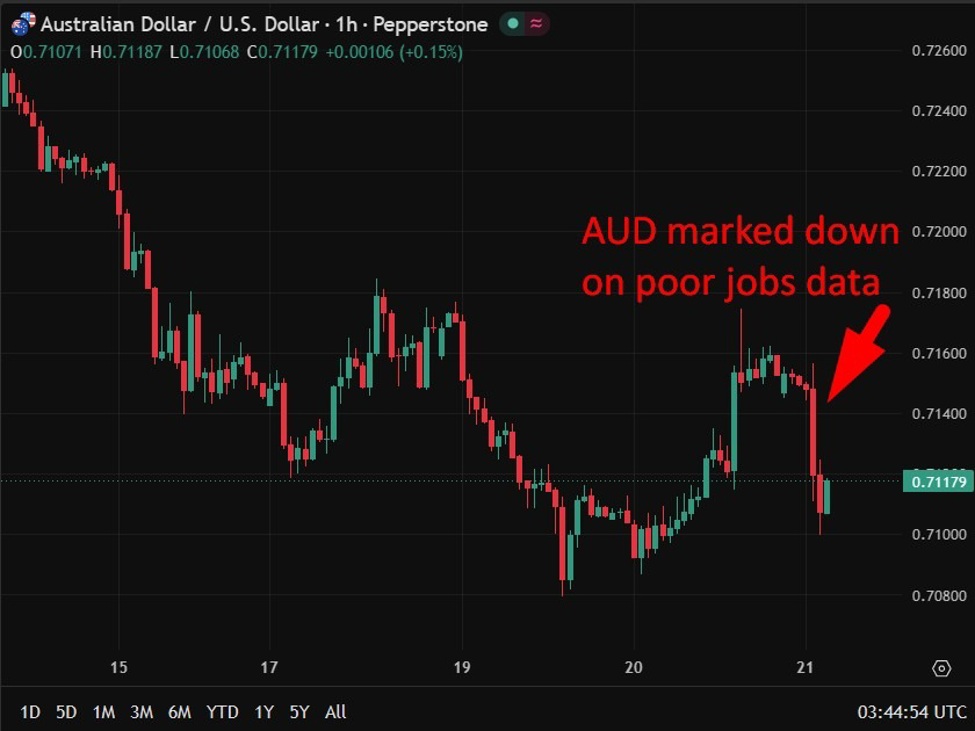
- AUD/USD fell after the weak employment report and RBA rate hike pricing deterioration; broader major FX traded in a subdued range
- South Korea confirmed 24-hour USD/KRW spot trading from July 6, eliminating the overnight gap caused by the previous 2:00am market close, with trial trading from June 29
The Asia-Pacific session on Thursday was a study in divergence, with a Wall Street tailwind lifting regional equities broadly even as the data flow delivered a series of uncomfortable readings for Australia and complicated the picture further for Japan’s central bank.
The overnight lead from New York was constructive. Softer yields and easing oil prices, themselves a function of cautious optimism around a potential Middle East resolution, had lifted US equities in the Wednesday session. That tone carried into Asian trading, though not uniformly. The KOSPI was the standout performer, surging more than 7% after Samsung Electronics shares rallied sharply following an eleventh-hour wage agreement that averted an 18-day mass walkout. The Korea Exchange briefly activated its sidecar mechanism after KOSPI 200 futures surged 5%, a circuit breaker designed not to stop the market but to slow it long enough for price discovery to stabilise. Japan’s Nikkei added nearly 3.5%. Chinese markets were the laggard, with the mainland up only around half a percent despite a fresh PBoC liquidity injection, and Hong Kong’s Hang Seng slipping into negative territory.
Japan’s data was the most consequential of the session. April exports rose 14.8% year-on-year, comfortably ahead of the 9.3% forecast, generating a surprise trade surplus of 301.9bn yen against a forecast deficit of 29.7bn yen. The flattering headline, however, came with a sharp asterisk: crude oil import volumes collapsed 64% in their steepest fall since 1980, a figure that reflects supply disruption as much as any underlying trade strength. The flash composite PMI for May told a similar story of surface resilience masking internal strain, easing to 51.1 from 52.2 as services stalled for the first time in over a year and selling price inflation hit its highest level in nearly 19 years of survey data.
Into that environment stepped BOJ board member Koeda, who delivered remarks that left little ambiguity about his policy inclinations. Underlying inflation is already around 2%, he said, the central bank needs to keep raising rates, and Middle East developments may push inflation above target looking ahead. With April CPI due Friday (preview in the points above), the timing felt anything but accidental.
Australia had a harder session. The flash composite PMI had already flagged the second contraction in three months, with business sentiment matching its pandemic-era low. The April labour force data then delivered a second blow: unemployment rose to 4.5%, its highest since November 2021, as employment fell 18,600 against expectations of a 17,500 gain. Hours worked rose 0.8%, providing a technical counterpoint, but not enough to arrest the repricing in rate expectations. The probability of an RBA August hike collapsed from 81% to 42%, and markets moved to no longer fully price any tightening for the remainder of 2026. National Australia Bank pushed its RBA hike call from June to August. AUD/USD fell in response.
On the geopolitical front, Iran’s newly formed Persian Gulf Strait Authority declared a controlled maritime zone across the Strait of Hormuz, requiring all vessels to seek authorisation before transit, a move that encroaches into waters the UAE and Oman regard as their own. Formal responses had not yet been issued, but they are unlikely to be welcoming. Separately, the Iranian Foreign Ministry said it had received US viewpoints and was studying them, while the Pentagon confirmed plans for a high-level delegation to Beijing to lay the groundwork for Defence Secretary Pete Hegseth to visit China, a diplomatic signal worth watching.
In markets, the session began with the aftershocks of two landmark corporate announcements. Nvidia beat estimates on both top and bottom lines, unveiled an $80bn buyback and lifted its quarterly dividend 25-fold from $0.01 to $0.25, yet its shares traded flat to lower as the results were absorbed. SpaceX followed with its long-anticipated S-1 filing for a Nasdaq IPO under the ticker SPCX, with Elon Musk retaining 85.1% combined voting power through a dual-class share structure that ensures going public changes very little about who runs the company. US equity futures dipped early in the Asia session but found support as the session progressed.
South Korea’s Finance Ministry confirmed that 24-hour USD/KRW spot trading will launch on July 6, with a trial period beginning June 29, eliminating the overnight gap left by the previous 2:00am market close and marking a significant step in Seoul’s push for MSCI developed market reclassification.
Intervention to prop up the Indian rupee:
Leave a Reply