


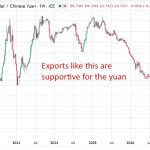
The beat across all three PMI readings will offer some support to risk sentiment toward China-exposed assets, though the underlying composition, with strength concentrated in tech exports rather than broad-based demand, limits the read-through for sectors tied to domestic consumption. The PBOC’s instruction to commercial banks to boost lending signals authorities see enough softness in underlying conditions to warrant direct intervention, a dovish policy signal that sits alongside the headline beat. Section 301 tariffs due from late July are likely to pull forward further export activity in the near term, but the fading of Middle East-driven front-loading and overseas buyers running down inventories ahead of a potential ceasefire point to a possible air pocket in exports once those effects wash through. Yuan-sensitive assets will be watching for confirmation of whether the AI-export strength can offset weakness in property and retail data through the third quarter.
—
China’s official manufacturing PMI rose to 50.3 in June from 50.0, beating forecasts, driven by AI-linked high-tech exports, even as property, retail and broader trade demand remained weak.
Summary:
- China’s official manufacturing PMI rose to 50.3 in June from 50.0 in May, beating the 50.1 consensus forecast in a Reuters poll and moving back above the 50-mark separating growth from contraction
- The non-manufacturing PMI, covering services and construction, improved to 50.2 from 50.1, against an expected reading of 49.9
- The composite PMI rose to 50.6 from 50.5
- Growth was driven by strong high-tech manufacturing exports tied to AI-related demand, with shipments of automated data processing equipment up 60% year-on-year in May, while furniture exports grew just 1.9% over the same period
- Retail sales fell in May for the first time in over three years, and new home prices declined at a faster pace, underscoring continued weakness in domestic demand and the property sector
- China’s central bank instructed some commercial banks to increase lending this month, a sign authorities see underlying conditions as soft enough to warrant direct support
- Economist Xu Tianchen flagged renewed trade front-loading in June as exporters accelerated shipments to the US ahead of new Section 301 tariffs due from late July, a dynamic he expects to fade
- A May meeting between Donald Trump and Xi Jinping produced no meaningful breakthroughs on tariffs or on Beijing’s potential role in pressing Iran toward ending the Middle East conflict
China’s factory activity returned to expansion in June, an official survey showed on Tuesday, with high-tech manufacturing exports tied to the artificial intelligence boom offsetting persistent weakness in domestic demand and broader trade.
The official manufacturing purchasing managers’ index rose to 50.3 in June from 50.0 in May, beating the 50.1 forecast in a Reuters poll of economists and moving back above the threshold separating expansion from contraction, according to the National Bureau of Statistics. The non-manufacturing PMI, which captures services and construction activity, improved to 50.2 from 50.1, also ahead of the 49.9 consensus estimate. The composite measure rose to 50.6 from 50.5.
The strength was concentrated almost entirely in sectors tied to global technology demand. Exports of automated data processing equipment, the category covering semiconductors and components powering AI data centres, jumped 60% in value terms year-on-year in May, according to the latest available trade data. By contrast, exports of furniture, a proxy for broader consumer goods demand, grew just 1.9% over the same period, illustrating the narrowness of the export recovery.
Conditions on the domestic side remain considerably weaker. Retail sales fell in May for the first time in more than three years, and new home prices declined at a faster pace than in prior months, extending a property downturn that continues to weigh on household wealth and spending. In response, China’s central bank instructed some commercial banks to increase lending this month, according to people familiar with the matter, the latest indication that policymakers see the $20 trillion economy as insufficiently supported by organic demand.
Xu Tianchen, senior economist at the Economist Intelligence Unit, who produced the highest individual forecast in the Reuters poll at 50.4, said the June data showed signs of renewed trade front-loading, with exporters accelerating shipments to the United States ahead of new Section 301 tariffs scheduled to take effect from late July. That dynamic, layered on top of earlier front-loading driven by Middle East-related price increases, appears to be fading as overseas buyers draw down existing inventories while awaiting clarity on a potential ceasefire in the region.
The picture leaves Chinese manufacturers increasingly dependent on a reopening of demand from the world’s largest consumer market, a prospect that received no meaningful boost from a closely watched May meeting between US President Donald Trump and Chinese leader Xi Jinping. That meeting produced no breakthroughs on tariffs, nor any indication that Beijing would use its influence over Tehran to help bring the Iran conflict to a close, leaving both the trade relationship and the broader geopolitical backdrop unresolved heading into the third quarter.



Leave a Reply