

The Bank of Korea is set to hold rates at 2.50% this week and through 2026 as FX and housing risks outweigh easing pressures.
Summary:
-
All 34 economists see BOK holding at 2.50% on February 26
-
Rates forecast to remain unchanged through 2026
-
Won weakness and housing risks curb easing appetite
-
Inflation at 2.0% in January, in line with target
-
Shift from January poll that had pencilled in further cuts
South Korea’s central bank is expected to keep its base rate steady at 2.50% at its February 26 meeting and maintain that level through 2026, according to a Reuters poll of economists.
All 34 respondents surveyed between February 19–23 forecast the Bank of Korea will leave rates unchanged this week. All 30 economists who provided end-2026 projections also expect policy to remain at 2.50% throughout the year, marking a notable shift from January when a sizeable minority still anticipated at least one additional cut.
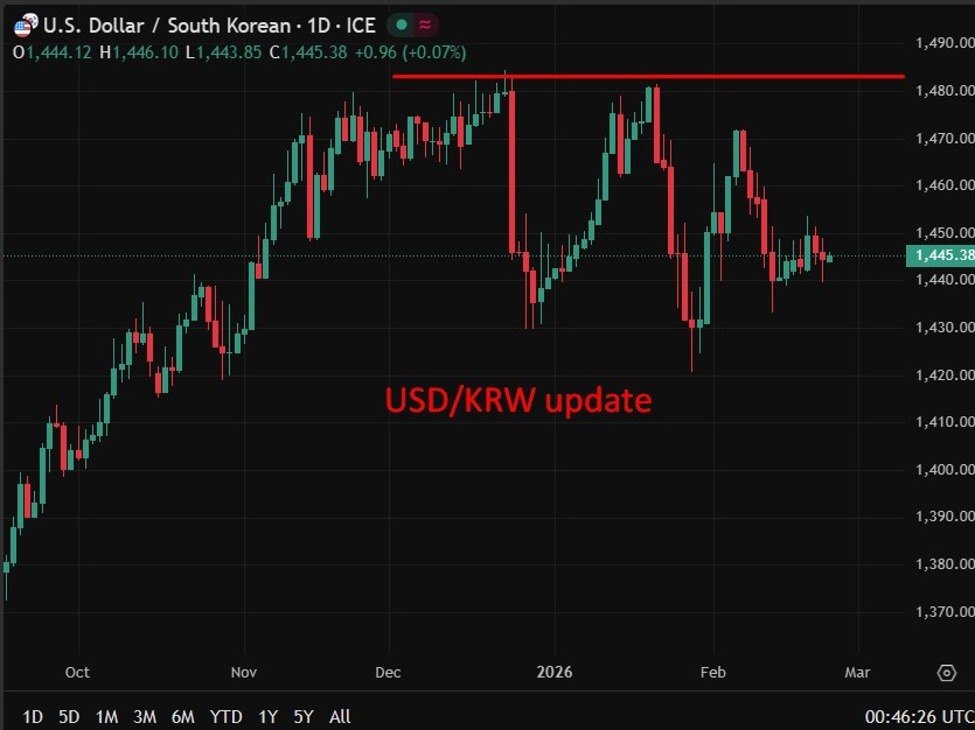
The policy pause comes as authorities grapple with currency volatility and financial stability risks. The Korean won has remained under pressure, declining 5.2% since the last rate cut in May and drawing scrutiny from the U.S. Treasury. Policymakers have responded with measures aimed at curbing excessive FX volatility, including activation of a swap line between the Bank of Korea and the National Pension Service.
At the same time, housing market momentum has raised red flags. Seoul apartment prices have risen for 55 consecutive weeks, climbing 0.15% in the latest week, heightening concerns about financial imbalances.
Inflation, by contrast, appears contained. Consumer price growth eased to a five-month low of 2.0% in January, aligning with the BOK’s target and offering little immediate justification for policy tightening.
Economists say the central bank has increasingly emphasised exchange rate stability and housing risks in recent meetings, reducing the likelihood of further easing this year. Some analysts suggest the possibility of rate hikes could re-emerge in 2027 if growth firms and asset prices continue to rise, though current market pricing for near-term tightening is seen as overly aggressive.
For now, the BOK appears set on an extended hold as it balances modest economic recovery against currency and housing vulnerabilities.


Leave a Reply