

- AI could trigger most significant reorganization of work in generations
- Rise in unemployment from AI may not indicate increased slack
- Current neutral rate possibly higher than pre-pandemic amid soaring AI investment
- Job displacement may precede job creation as AI transition unfolds
- Standard monetary policy may not address AI-driven unemployment without stoking inflation
- Overall unemployment still low at 4.3%, too early to see AI effects in the aggregate
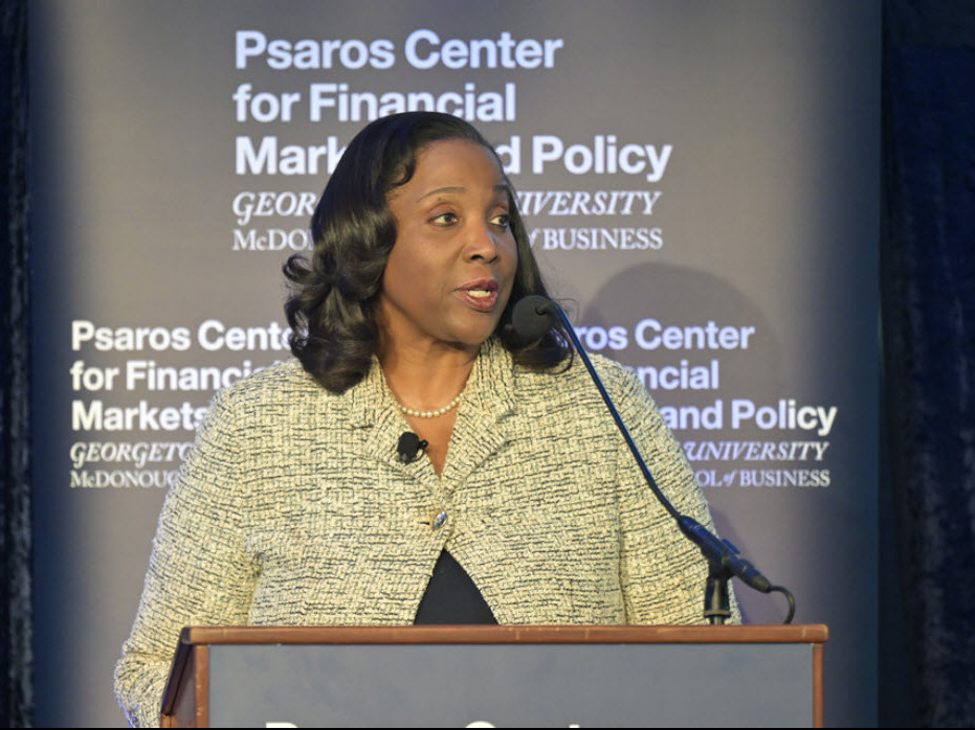
Fed Governor Lisa Cook spoke at the National Association for Business Economics, offering her latest thoughts on AI’s economic implications and what it means for monetary policy.
Cook, who has long studied innovation economics and machine learning, struck a cautiously optimistic tone on AI’s long-term potential while flagging near-term risks for the labor market and policy tradeoffs.
Cook noted that AI adoption is already showing early effects in specific sectors — demand for coders has declined, and unemployment among recent college graduates has ticked higher as employers deploy AI for entry-level tasks. However, the overall unemployment rate remains low at 4.3% and layoffs are subdued, so aggregate effects haven’t materialized yet.
On the monetary policy front, Cook raised two considerations worth watching. First, if AI drives a productivity boom, a rise in unemployment may not signal increased slack in the traditional sense. That would put the Fed in a difficult position — standard demand-side policy tools may not be able to address AI-driven job displacement without stoking inflation. She suggested education and workforce policy may be better suited for the task.
Second, Cook is thinking about how AI investment is affecting the neutral rate. Soaring business investment in data centers and chips despite elevated rates suggests the current neutral rate may be higher than pre-pandemic levels. That dynamic could reverse once productivity gains are fully realized or if the transition widens income inequality.
Cook characterized the current moment as potentially “the most significant reorganization of work in generations,” invoking Schumpeter’s creative destruction framework. She cautioned that job displacement may precede job creation during the transition, which could temporarily lift unemployment and weigh on labor force participation.




Leave a Reply