
- South Korea secures alternative oil as Hormuz disruption hits supplies
- AUD, NZD fall as oil surge and ongoing war risks lift stagflation fears
- PBOC sets USD/ CNY reference rate for today at 6.8880 (vs. estimate at 6.8764)
- Trump offers no new Iran signals; markets turn cautious after speech
- Trump spoke without adding new info, still a 2-3 timeline, no ground war announced
- Trump address: Going to hit Iran very hard over the next 2-3weeks
- Massive Australian February trade surplus, >double estimates at 5.683bn
- Chatter that Trump will float the idea of using ground troops in Iran in his address
- Hedge funds suffer worst drawdown since 2022 as volatility hits markets
- Tsunami warning issues after M7.8 earthquake, Indonesia (Molucca Sea)
- Stolen from Iran, mass-produced — US unleashes ‘Corolla drone’ on Tehran
- US uses Pakistan channel to reach Iran as ceasefire prospects remain uncertain
- Trump to overhaul steel, aluminium tariffs, lifting effective import costs
- investingLive Americas FX news wrap 1 Apr: Stocks rise, USD trims losses on stronger data
- SpaceX files confidential IPO paperwork, eyes record $1.5T+ valuation
At a glance:
- Trump signals Iran war “nearing completion” but leans hawkish
- Repeats 2–3 week timeline, warns of further heavy strikes
- No mention of withdrawal or ground troop deployment
- Markets fade prior risk-on move as de-escalation signal absent
- USD firmer, oil higher, equities softer, gold lower
- US tariff overhaul adds to inflation backdrop
- Australia trade surplus strong, but weak imports raise demand concerns
US President Trump told the nation that the Iran conflict is “nearing completion,” framing the operation as largely successful while reiterating a 2–3 week timeline. However, the tone leaned more hawkish than conciliatory, with Trump warning the US would hit Iran “extremely hard” if a deal is not reached, including potential strikes on electricity and possibly oil infrastructure.
While he referenced ongoing discussions with what he described as more “moderate” Iranian leadership, there was no confirmation of a ceasefire framework, no mention of a US withdrawal, and no indication of ground troop deployment. The overall message was one of continued pressure rather than clear de-escalation.
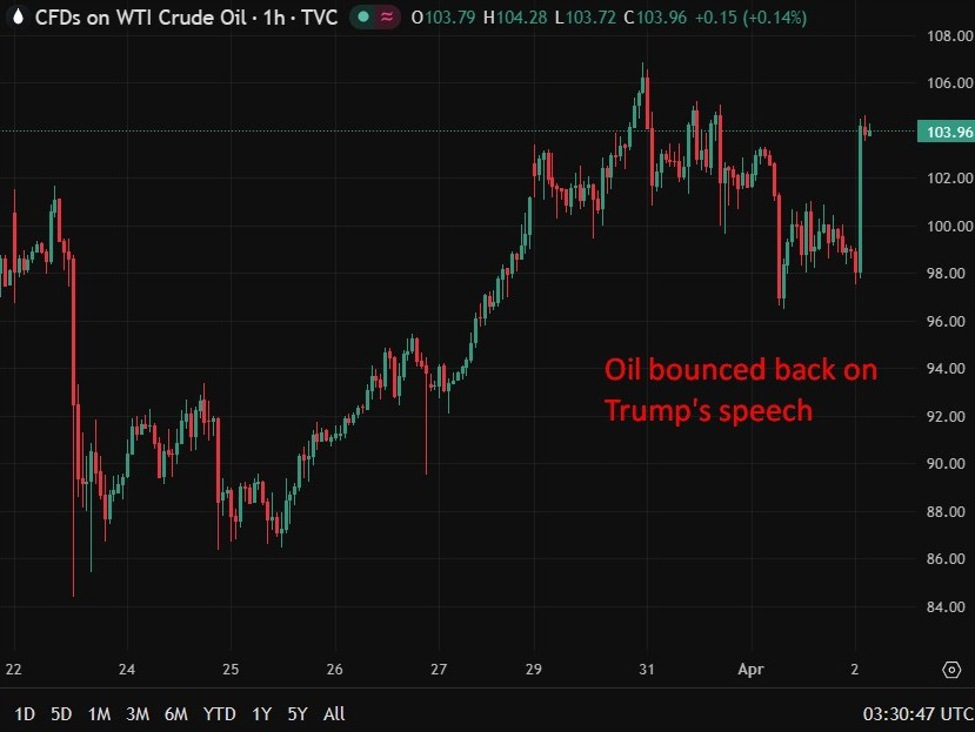
Markets had entered the speech positioned for a softer tone following two days of risk-on price action and a pullback in oil. That signal did not materialise, and the move was largely faded. The US dollar strengthened, equities turned lower, oil prices pushed higher, and gold declined, reflecting a cautious shift back toward risk-off positioning.
The broader geopolitical backdrop continues to centre on the Strait of Hormuz, with no new clarity on reopening timelines, leaving energy supply risks firmly in place and maintaining upward pressure on inflation expectations.
Separately, trade policy developments added to the inflationary mix, with the US expected to overhaul steel and aluminium tariffs. While the proposed changes simplify compliance, they are likely to increase effective import costs by applying tariffs to the full value of finished goods.
From Australia, February trade data surprised to the upside, with the surplus exceeding AUD 5bn, more than double expectations, driven in part by strong gold exports. However, imports declined month/month against expectations for an increase, pointing to potential softness in domestic demand and raising questions about underlying consumer strength.



Leave a Reply