

South Korea flags concern over widening FX volatility
-
Authorities monitoring markets closely
- Global policy divergence cited as key risk
-
FX intervention remains an option
- RBI action highlights regional playbook
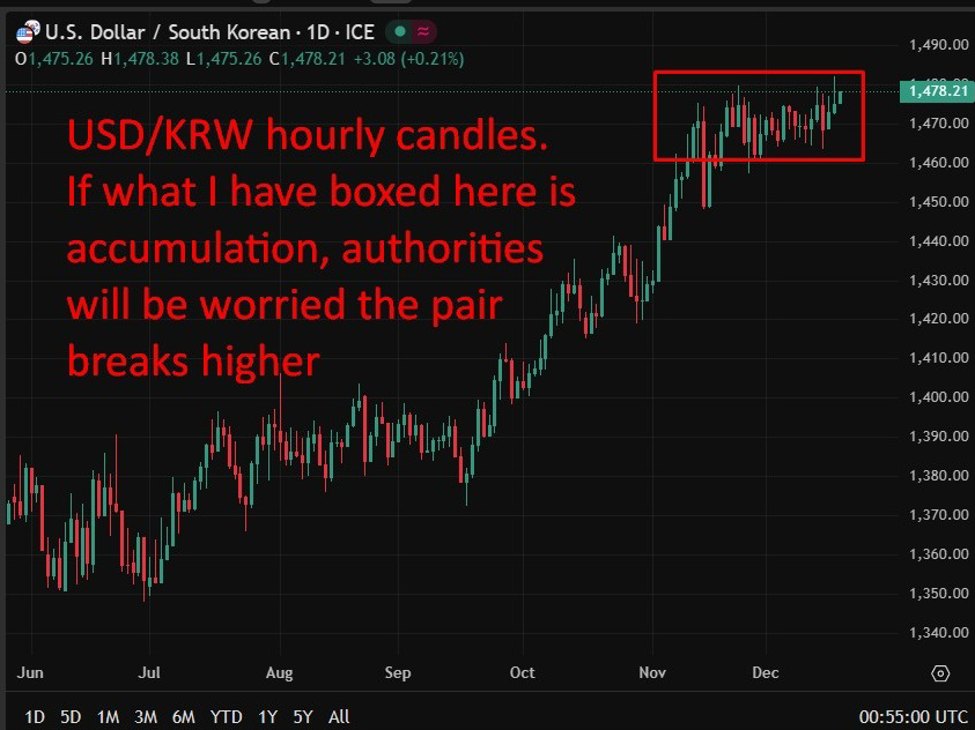
South Korea’s finance minister has stepped up warnings over rising foreign-exchange volatility, signalling a heightened state of alert as global monetary policy divergence continues to weigh on local markets.
Speaking after a meeting with Bank of Korea Governor Rhee Chang-yong and senior financial regulators, Finance Minister Koo Yoon-cheol said authorities are increasingly concerned about widening FX swings and their potential spillover into broader financial conditions. He added that the government is monitoring markets around the clock and stands ready to deploy policy measures if volatility becomes excessive.
The comments come as currency markets across Asia face renewed pressure from diverging global interest-rate paths, particularly the contrast between still-restrictive U.S. policy and more cautious stances elsewhere. For South Korea, the risk is that sharp moves in the won could amplify imported inflation pressures or undermine investor confidence at a sensitive point in the domestic cycle.
While Koo did not spell out specific actions, the language leaves the door open to stepped-up coordination with the Bank of Korea, including the possibility of direct or indirect intervention. The approach would mirror recent developments in India, where the Reserve Bank of India moved swiftly this week to smooth rupee volatility amid global FX pressures, reinforcing the region’s preference for disorderly-move prevention rather than tolerance of sharp currency swings.
The Reserve Bank of India intervention yesterday sent USD/INR into a tailspin, but a 50% or so recovery ensued:
In South Korea’s case, the finance ministry has historically taken the lead in FX policy, with the central bank playing a supporting operational role. That framework suggests any sustained bout of won weakness could prompt official action at the behest of the finance ministry, particularly if moves are seen as speculative or disconnected from fundamentals.
For now, officials appear focused on signalling vigilance rather than immediate action. However, the emphasis on global policy divergence underscores the sensitivity to external shocks, especially as markets reassess the timing and scale of future U.S. rate cuts. As seen elsewhere in Asia, authorities are increasingly unwilling to allow sharp currency moves to feed volatility across asset classes, making FX stability a key near-term policy priority.



Leave a Reply