
Key takeaways
-
A Google software engineer, Michele Spagnuolo, has been charged by U.S. prosecutors with commodities fraud, wire fraud, and money laundering.
-
Prosecutors allege he used confidential Google “Year in Search” data to win about $1.2 million on Polymarket.
-
The case is important because it shows that insider trading concerns do not stop at the stock market. They can also apply to prediction markets, crypto-linked markets, and other event-based trading platforms.
-
The bigger lesson for young traders and new employees is simple: if you have confidential information from work, do not use it to trade, bet, tip a friend, or profit from it.
-
Blockchain wallets may look anonymous, but on-chain transactions can often be traced back to real-world identities through exchanges, payment processors, and KYC records.
What happened in the Google and Polymarket insider trading case?
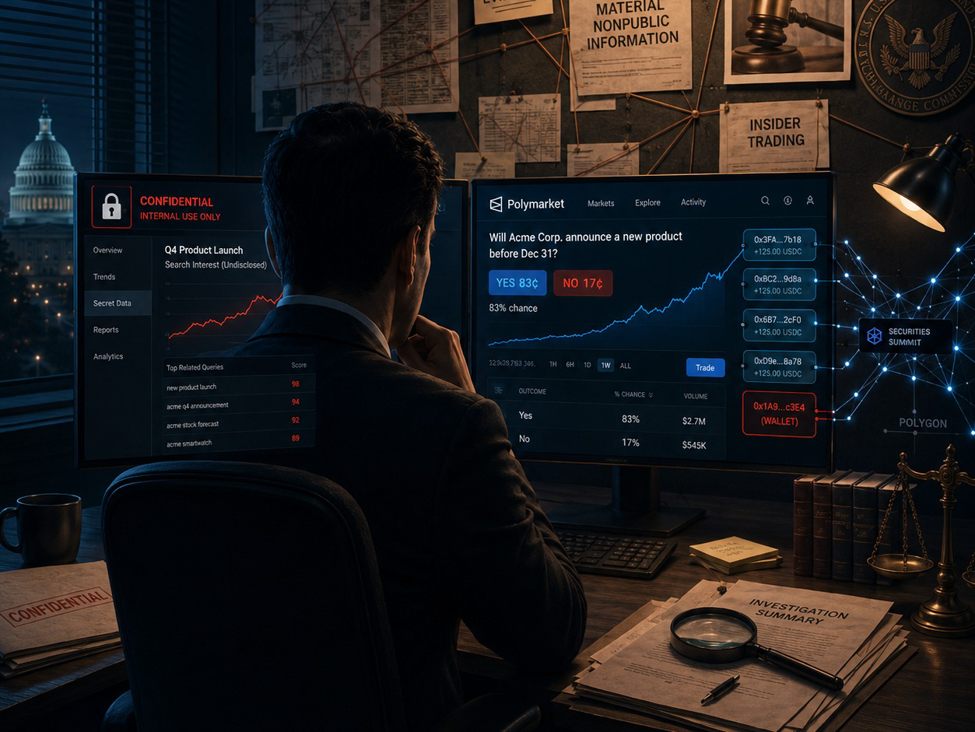
“According to a criminal complaint unsealed by the U.S. Attorney’s Office for the Southern District of New York, Google software engineer Michele Spagnuolo was charged with commodities fraud, wire fraud, and money laundering after allegedly using confidential business information to make more than $1.2 million in trading profits on Polymarket.
According to U.S. prosecutors, Michele Spagnuolo, an Italian citizen living in Switzerland, allegedly accessed confidential internal Google information connected to the company’s 2025 “Year in Search” data. Prosecutors say he then used that nonpublic information to place large bets on Polymarket under the username “AlphaRaccoon.”
The alleged trading happened before Google publicly released the information. Once the results became public, the markets resolved in his favor, and prosecutors say he made about $1.2 million in profit.
Spagnuolo has been charged with commodities fraud, wire fraud, and money laundering. The charges are allegations, and he is presumed innocent unless proven guilty in court.
Why this case matters beyond Polymarket
This case is not only about one Google employee, one prediction market, or one winning bet. It is about a much bigger issue: what happens when someone uses private information from their job to make money in a market.
Many young people entering the workforce may not fully understand this yet. They might think:
“I just saw something at work. It is not a stock trade. It is just a bet.”
Or:
“I heard a useful tip. Why not use it?”
That thinking can be dangerous.
Insider trading is not only about Wall Street bankers secretly trading shares before a merger. The same basic problem can appear in many areas:
-
A company employee knows earnings will be much better or worse than expected before the public knows.
-
A tech worker sees confidential product launch data and trades a supplier or competitor stock.
-
A marketing employee sees unreleased sales numbers and buys options.
-
A government or military worker has nonpublic operational information and bets on an event outcome.
-
A company insider uses private data to trade prediction market contracts before the information is public.
The asset may change. The platform may change. The principle does not.
What is insider trading, in plain English?
Public vs confidential information you can’t bet or trade on
Insider trading usually means using important nonpublic information to make a trade or help someone else make a trade.
In stocks, that could mean buying or selling shares before earnings, a merger, a regulatory decision, or another market-moving announcement that is not yet public.
In prediction markets, it can mean using private information to bet on an event outcome before everyone else has access to the same facts.
The key questions are usually:
| Question | Why it matters |
|---|---|
| Is the information public? | If the market does not know it yet, using it may be a serious problem. |
| Is the information important? | If it could affect the price or probability of an outcome, it matters. |
| Did the person have a duty to keep it confidential? | Employees, contractors, consultants, and advisers often sign confidentiality policies. |
| Did the person trade, bet, or tip someone else? | Acting on the information can create legal exposure. |
Why is insider trading wrong?
Some beginners think insider trading is only wrong because it is against the rules. But the deeper reason is fairness.
Markets work best when participants believe the game is not rigged. If insiders can secretly use private information for personal profit, ordinary traders and investors are at a structural disadvantage.
Insider trading can hurt:
| Who gets hurt? | How they can be hurt |
|---|---|
| Regular traders | They may take the opposite side of trades against someone who already knows the outcome. |
| Investors | Confidence in the market can fall if people believe insiders always win. |
| Employers | Confidential data can be misused, creating reputational and legal damage. |
| Platforms | Prediction markets and exchanges can face regulatory pressure if abuse becomes common. |
| The insider | Legal charges, job loss, asset freezes, fines, prison risk, and long-term career damage. |
The issue is not whether the person was “smart” enough to see the opportunity. The issue is that they allegedly used information they were not allowed to use for personal gain.
Why “I heard a tip” can still be risky
A lot of insider trading problems begin casually.
Someone says:
“Do not tell anyone, but our earnings are going to be amazing.”
Or:
“My company is about to announce a big partnership.”
Or:
“This market outcome is basically locked, but it is not public yet.”
For a young trader, that can sound exciting. But the legal and professional context matters.
You need to ask:
-
Where did this information come from?
-
Is it public?
-
Was someone supposed to keep it confidential?
-
Am I being given this because of someone’s job, access, or position?
-
Would I feel comfortable if this trade appeared next to my name in a government investigation?
If the information came from someone’s workplace and is not public, the safest answer is usually: do not trade on it, do not bet on it, and do not pass it to others.
How could insider trading happen in a normal company job?
Imagine you work at a public company. You are not the CEO. You are not a famous investor. You are just a regular employee in finance, marketing, engineering, sales, customer support, or operations.
You might still see sensitive information.
Examples:
-
Quarterly earnings are stronger than expected.
-
A major customer is leaving.
-
A new product is delayed.
-
A merger discussion is happening.
-
A cyber incident has not been disclosed.
-
A large internal dataset shows a major trend before the public knows.
If you trade your company’s stock, options, crypto token, supplier, competitor, or related market based on that confidential information, you could create a serious legal problem.
Even if you do not trade yourself, telling a friend or family member can also be dangerous. That is often called “tipping.”
Why prediction markets are not a legal loophole
Prediction markets may feel different from stock exchanges because they often look like event betting.
Will a person win an election?
Will a company launch a product?
Will a celebrity be the most searched person of the year?
Will a geopolitical event happen before a certain date?
But if a contract is traded in a market and someone uses confidential, material information to profit, regulators and prosecutors may still view it as market abuse.
The Google and Polymarket case is important because it sends a warning: new platforms do not erase old legal principles.
A blockchain interface, a crypto wallet, or a prediction market username does not automatically make insider trading safe.
How can law enforcement trace a Polymarket wallet?
A common mistake is assuming that blockchain activity is anonymous.
It is usually better to think of it as pseudonymous. A wallet address may not show your name at first, but the transaction history can be public and permanent.
Here is the basic tracing process:
| Step | What investigators look for |
|---|---|
| 1. Suspicious trading pattern | Large, precise bets on unlikely outcomes before a public announcement. |
| 2. On-chain wallet trail | Funds moving from Polymarket contracts to external wallets. |
| 3. Off-ramp | Crypto moving to an exchange, broker, or payment processor. |
| 4. KYC records | Centralized platforms often collect ID, address, bank, and account information. |
| 5. Real-world link | Subpoenas can connect the wallet to a person or entity. |
In simple terms: the wallet may not have your name on it, but the money often has to go somewhere useful. That is where investigators can connect the dots.
What this means for crypto traders and prediction market users
For traders, this case is a reminder that “edge” and “inside information” are not the same thing.
A legitimate edge can come from:
-
Better research
-
Faster analysis of public information
-
Stronger market structure reading
-
Better risk management
-
Understanding order flow
-
Statistical modeling
-
Reading public filings and public data more effectively
A dangerous edge can come from:
-
Confidential employer data
-
Private government or military information
-
Nonpublic earnings information
-
Leaked corporate announcements
-
Restricted internal dashboards
-
Tips from someone who breached a duty
Traders should want edge. But they should want clean edge.
Practical rule for young employees
If you are starting your career, use this simple rule:
If you learned the information because of your job, and the public does not know it yet, do not use it to trade, bet, tip, or profit.
That applies even if:
-
The trade is not in your own company’s stock.
-
The market is a prediction market.
-
The trade is through crypto.
-
The account uses a pseudonymous wallet.
-
You think “everyone does it.”
-
You think the amount is small.
-
You think nobody will notice.
Some mistakes are not just bad trades. They can become career-ending legal problems.
The broader prediction market implication
Prediction markets are growing because they can be useful. They aggregate expectations about elections, macro events, economic data, technology launches, sports, culture, and public outcomes.
But if these markets are going to become more mainstream, they need trust.
That means platforms will likely face more pressure to monitor suspicious activity, cooperate with law enforcement, improve compliance, and detect users who appear to be trading with nonpublic information.
The irony is that blockchain transparency may help with enforcement. On-chain markets can leave a permanent record of trades, transfers, and wallet behavior. That does not prevent all abuse, but it can make suspicious patterns easier to investigate after the fact.
FAQ: What should beginners know about insider trading?
Is insider trading only about stocks?
No. Insider trading is most commonly discussed in stocks and options, but the same basic concept can apply more broadly when someone uses confidential, material, nonpublic information to profit in a market.
Can prediction market trading create insider trading risk?
Yes. If someone uses confidential information to bet on an event outcome before the public has access to that information, regulators may treat it as a serious market abuse issue.
Is it illegal to trade based on public information?
Usually, trading based on public information is allowed. The problem is using important nonpublic information that came from a confidential role, workplace access, or a breach of duty.
What should I do if I hear a confidential tip?
The safest approach is not to trade, not to bet, and not to pass it on. If the information came from work, follow your company’s compliance policy and ask the legal or compliance team if needed.
Are crypto wallets anonymous?
Not fully. Wallets are pseudonymous, but blockchain transactions are public. If funds touch a centralized exchange or payment processor, KYC records can help investigators link wallet activity to a real person.
Summary for young traders and new employees
The Google and Polymarket case is a useful warning for anyone entering trading, crypto, prediction markets, or the workforce.
There is nothing wrong with doing research, building models, reading public information better than others, or developing a legitimate trading edge.
But using confidential workplace information for personal profit is a different matter entirely.
If you work at a company, especially a public company or a company with market-sensitive data, treat confidential information seriously. Do not trade on it. Do not bet on it. Do not tip others. Do not assume a wallet username protects you.
Markets can reward skill, patience, and analysis. They can also punish shortcuts that cross legal and ethical lines.





Leave a Reply