


- Prior was +162K (revised to +133K)
- Two-month net revision -60K
- Unemployment rate 4.2% vs 4.1% expected
- Prior unemployment rate 4.1%
- Unrounded unemployment 4.1753% vs 4.1413% prior
- Participation rate 61.8% vs 61.6% prior
- U6 underemployment rate 7.6% vs 7.7% prior
- Average hourly earnings +0.1% m/m vs +0.3% expected
- Average hourly earnings 3.0% y/y vs +3.2% expected
- Average weekly hours 34.4 vs 34.3 expected
- Change in private payrolls +46K vs +85K expected
- Prior private payrolls +127K
- Change in manufacturing payrolls K vs +10K expected
- Government payrolls -17K vs +35K prior
This is a soft report almost across the board. The headline missed badly, the unemployment rate ticked higher and wage growth was much softer than expected. On top of that, the prior two months were revised down by a combined 60K, with July now showing a 10K decline in payrolls
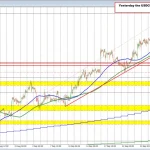
Fed funds pricing was at a 28% chance of a rate hike ahead of the data and USD/JPY was trading at 157.60. US 2-year yields were at 4.78% with 10s at 5.23%. In the immediate aftermath of the report, Fed funds is down to 15% with USD/JPY at 157.15, 2s at 4.72% and 10s at 5.17%. Notably, December is now up for debate at just an 88% chance of any hikes this year.
As you can see from the market reaction, this is a dovish report and closes the debate on an October rate hike barring a red-hot CPI reading. The one significant offset is the household survey. Employment there rose by 406K and the labor force expanded by 485K, lifting the participation rate two-tenths to 61.8%. That’s why I wouldn’t characterize the rise in unemployment to 4.2% as particularly ugly. The unrounded rate was 4.1753%, so it was also only narrowly above the threshold for a 4.2% print.
Non-farm payrolls:
The wage numbers are arguably the most important part for the Fed and they’re clearly soft. Average hourly earnings rose just 5 cents, or 0.1%, in September and the year-over-year pace slipped to 3.0%. Hours held up at 34.4, so there isn’t much evidence of companies aggressively cutting worker hours, but wage pressure is moving in the right direction from an inflation perspective.
In terms of sectors, there isn’t one big distortion explaining away the weakness. Healthcare added 17K, including +13K in ambulatory care and +12K in hospitals, though nursing and residential care lost 9K. Construction added 11K, with non-residential specialty trade contractors up 12K. Manufacturing added another 9K and has now gained 72K since its December 2025 low.
On the weak side, financial activities lost 7K and has now shed 129K jobs since May 2025, mostly in insurance. Government employment fell 17K, while professional and business services was down 9K and information fell 10K. Unlike August, there isn’t a huge education or restaurant seasonal quirk propping up the headline.
I’d characterize the 29K headline as legitimately weak rather than a number that can easily be explained away by composition. Private payrolls were only +46K, revisions took another 60K out of the prior two months and earnings badly missed expectations



Leave a Reply